

true self : ค้นหาหนังสือธรรมะ หน้า 8 / 8
หน้าหนังสือทั้งหมด

36
Understanding the Eightfold Path
Forth, the truth of the path to cessation of suffering or "Magga" in Pali. อธิษัขข้อที่ 4 คือ ทางแห่งการพ้นทุกข์ หรือมรรค
There is a path to the end of suffering and a gradual path of self-improvement
บทความนี้อธิบายถึงมรรคหรือทางแห่งการพ้นทุกข์ในพุทธศาสนา ซึ่งคืออริยมรรค 8 ที่นำไปสู่การสิ้นสุดของทุกข์และการพัฒนาตนเองอย่างค่อยเป็นค่อยไป มันอยู่ระหว่างความพอใจมากเกินไปและการอดทนเกินไป ในการเปรียบเที
90
Meditation Benefits
86 MEDITATION BENEFITS
MEDIATION BENEFITS
Meditation has been linked to a variety of health benefits. A review of scientific studies
identified favorable outcomes of meditation which include: relaxa
Meditation is associated with various health benefits such as relaxation, concentration, and increased awareness. Scientific studies reveal its positive impact on metabolism, heart rate, and brain act
15
Understanding Boon and Kilesa in Meditation
Suzanne Jeffrey
concentrate on the inside, or inside our center, it is impossible for kilesa to exist. Whenever you are angry, your mind goes outside. It is easy to get hooked, easy to be angry. The
In this insightful discussion on meditation, Luang Por explains how the mind often drifts outside our center, leading to anger and distraction from self-awareness. By focusing inward and engaging in g
17
Insights from Luang Por: Buddha, Jesus, and Meditation
Suzanne Jeffrey
within you!"
Jon, obviously not afraid of the hard questions, asks, "Could you tell me what you think is the difference between Buddha and Jesus?"
Luang Por says, "Buddha teaches th
In this engaging discussion, Luang Por provides insights on the differences between Buddha and Jesus, emphasizing Buddha's teachings on proving everything versus Jesus' acceptance. He articulates the
27
The Concept of the Unknown Factor in Human Belief
Luang Por: "Humans are categorized into two groups: either believing that the Unknown Factor exists, or believing that it does not exist. There are, of course, atheists, who say that the possibility e
Luang Por categorizes humans into two groups based on belief in the Unknown Factor, discussing atheists inclusively in those who believe. He elaborates on those who perceive this factor as necessary f
45
The Importance of Moral Education in Teaching
Only with moral education can human beings eliminate conflicts, selfish and greedy tendencies and practices so that man may truly coexist with mindful and peaceful consideration for each other. This s
This text emphasizes the necessity of moral education to eliminate selfish and greedy tendencies, enabling peaceful coexistence. It discusses the role of various types of teachers—parents, school teac
22
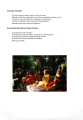
Formation of Good Habits
Formation of Habits
* The work which is done in each of the five rooms
* Attitude toward the consumption of the four necessities in these rooms
* The way to consume the four necessities in these rooms
This text discusses the various aspects of habit formation, emphasizing the importance of attitude towards life's necessities, manners in living and working together, and one's approach to livelihood.
26
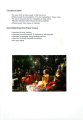
Formation of Habits
Formation of Habits
. The work which is done in each of the five rooms
. Attitude toward the consumption of the four necessities in these rooms
. The way to consume the four necessities in these rooms
This text discusses the formation of habits in various aspects of life, focusing on the work done in different areas and attitudes towards basic necessities. It emphasizes the importance of good habit
23
Self-Reflection and Dhamma Contemplation for Personal Growth
1. EXAMINE YOURSELF
Before bedtime each night, take a few minutes to meditate upon your day.
Reflect on everything you have done throughout the day, from the time you wake up, to the time you go
In this text, readers are encouraged to engage in nightly self-reflection, evaluating their daily actions to accumulate merit and relinquish negative deeds. The practice emphasizes giving up wrongdoin
26
The Journey of Self-Discovery Through Meditation
stung when the bedbugs bit me, but I would not kill them. I would catch them and put them in a spittoon covered with a piece of paper so they could not get away. When morning came, I would release the
The author shares her lifelong passion for cleanliness and orderliness, rooted in a disciplined upbringing at Wat Paknam. Through meditation, she recalls past lives that have contributed to her self-t
19
Understanding Buddhism: Key Concepts and Texts
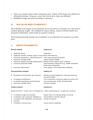
death
chronicle
position
awake with awareness
awake in the sea of merit
fire contemplation; fire as meditation device
shrine; altar; group of tables containing images of Buddha
triple robe; the three
This text delves into crucial Buddhist principles including the Tipitaka, which is a comprehensive scripture forming the foundation of Buddhist teachings. It encompasses three baskets: Vinaya Pitaka,
106
The Importance of Meditation for Mental and Physical Health
When your body breaks down it becomes sick. Illness of the body only affects the inflicted individual. However, when the mind is sick, many are affected.
Meditation keeps the mind and body in harmony.
Meditation plays a crucial role in maintaining both mental and physical health. While physical illness primarily affects the individual, mental illness can have broader impacts. Meditation fosters hap
6
Ten Reflections for the Monk
Ten Reflections for the Monk
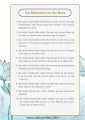
1. We monks should often reflect that as monks, we are no longer householders. We should adopt the manners and conduct expected of a monk.
2. We monks should often reflec
This text presents ten critical reflections for monks to enhance their spiritual discipline. It emphasizes the importance of embracing monastic life, relying on community support, and continually impr
107
परम ध्यान और आत्मा का केंद्र
(sleeps).
Luang Phaw Wat Paknam explained that the ability to bring our mind to a standstill at this centre of the body is what we call ‘majjhima’ or ‘centering’. When the mind comes to a standstill
लुआंग फॉ वट पाकनम ने समझाया कि शरीर के केंद्र पर ध्यान लाने की क्षमता को 'मध्यम' कहा जाता है। यह वह बिंदु है जहाँ मन सद्भाव में आता है, और इसे अच्छे या बुरे के संदर्भ में नहीं रखा जा सकता है। इसके द्व
108
The Path to Spiritual Enlightenment
center of the Sphere of Concentration, the Sphere of Wisdom [paññā] will be attained. When we bring the mind to a standstill at the centre of the Sphere of Wisdom, the Sphere of Liberation [vimutti] w
This text outlines the spiritual progression as defined by the teachings of the Buddha, emphasizing the importance of concentration, wisdom, and the journey towards liberation. It explains how by brin
140
Understanding the Dhammakāya and Its Mind
reaching the Dhammakāya and becoming one and the same as the Dhammakāya. The body of the Dhammakāya incorporates layers of perception, sensory registration, central processing and cognition in just th
The Dhammakāya embodies a body that resembles human perception while its mind can expand significantly, allowing the meditator to observe the eight inner bodies. This process unveils the Three Signs o
206
Knowledge of the Path to Cessation of Suffering
3.8.1 Dukkhanirodhagāminī Saccāṇa: Knowledge of the existence of Path to the Cessation of Suffering.
3.8.2 Dukkhanirodhagāminī Kiccaṇāṇa: Knowledge of what must be done in relation to Path to the Ces
This text discusses the twelve stages of the Cycle of Examination derived from the Four Noble Truths and their relation to enlightenment. It elaborates on the three circuits: knowledge of existence, k
215
The Tathāgata and the Cycle of Enlightenment
Yāva kivāñca me bhikkhave, imesu "O! Monks! If the Tathāgata had not fully com-
catusu ariyassaccevaṁ tiparivattaṁ completed these three cycles with their twelve com-
dvaḍasākāraṁ yathābhuṭṭaṁ nān
In this text, the Buddha addresses monks, emphasizing that he has fully completed the three cycles of truth, which affirms his status as a fully self-enlightened Buddha. He claims that this enlightenm
221
Understanding Suffering and the Cycle of Existence
conditioning, stopping, Cessation of suffering 93-4 {metaphor, lion and
Suffering as 51-2; suffering as 47 hunter 94); responsible for keeping
conduct 145-6 being in cycle of rebirth 80; retin-
confu
This text delves into the nature of suffering, including its definitions and categorizations. It discusses the Cycle of Existence and how attachment leads to rebirth. The text highlights the importanc
228
Understanding Nibbāna and the Noble Truths
natal wind 61
neighbourhood concentration 43,
neither-perception-nor-non-perception, absorption of 193
nibbāna, anupadisesa 21, 112, 114;
ayatana 21, 102, 112, 114; sa
upādisesa 21, 112, 113-4
Nirvana
This text delves into key concepts in Buddhist philosophy, particularly Nibbāna and the Noble Truths. It discusses the interrelation of teachings, the significance of practicing the Middle Way to atta